A Q&A with Ciarb’s 2026 President
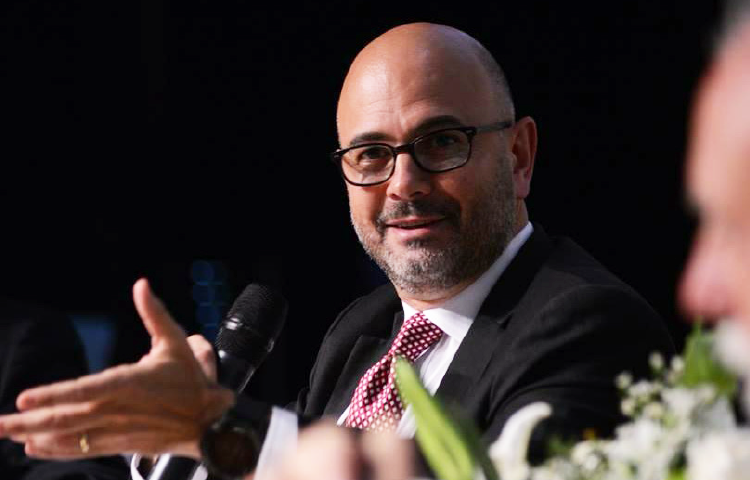
Ciarb is pleased to introduce our 2026 President, Cesar Pereira C.Arb FCIArb. We spoke to President Cesar about his Ciarb journey so far, and his plans and priorities for the year ahead.
What has your Ciarb journey looked like so far?
I joined Ciarb as a Fellow in 2013, after the first Accelerated Route to Fellowship held in Brazil. A group of other Fellows and I realised the importance of a greater Ciarb presence in Brazil and Latin America. We created Ciarb Brazil Branch in 2019, and I was honoured to be its first Chair.
Ciarb has given me the opportunity to engage with other members from around the world in a variety of situations and projects. I owe much of my current international practice to doors that Ciarb has opened. This is my vision of what we should offer to our membership generally.
What will be your first steps as President?
I am a strong believer in the collaboration between Branches and in the decentralised nature of Ciarb. We have so much power and energy in our Branches, and such a vibrant membership. I intend to work with our Branches and facilitate their exchange and collaboration.
What are your top priorities for the year ahead?
Ciarb’s leadership is committed to continuing this transformation. As Ciarb’s global ambassador, my priority is to engage with the Chair of our Board of Trustees, Ben Giaretta C.Arb FCIArb and Ciarb CEO Don MacIntyre as well as our Branches to promote ADR globally and help advance Ciarb’s strategic goals.
I am the first Latin American to have been elected president in Ciarb’s history. We also have a Mexican as Chair of the North America Branch, Cecilia Flores Rueda FCIArb, one of the largest of our 44 Branches. Mohamed was Ciarb’s first African president. This reality provides an opportunity for Ciarb to acknowledge our global reach and the diversity of our Branches and membership.
Continuing to promote our global reach is something I am keen to support, together with our CEO and Board of Trustees. To give a concrete example, Spanish is recognised as the second most used language in international arbitration after English. We already regularly offer a few training courses in Spanish, Arabic and, occasionally, in other languages. However, we could do more work in other languages without compromising any of our global goals and standards.
Another example is increasing Ciarb’s presence in dispute boards. We have widely recognised expertise in construction, including adjudication. Dispute boards are a global reality of today’s dispute prevention and dispute resolution toolbox.
Ciarb’s dispute board rules recently celebrated their 10th anniversary and, after an update review last year, they remain fit for purpose. Expanding some of our thought leadership on dispute boards will enable us to support our members as they continue to incorporate dispute boards into their practice.
A final area I am passionate about is diversity and inclusion in the industry. Ciarb is the perfect platform to provide opportunities, support and mentorship to our members around the world. For example, in 2025, Brazil’s Young Members Group launched a book of articles written by Student and Associate members and Fellows during a Ciarb mentorship programme.
You've expressed interest in strengthening connections between Branches. What do you hope this will achieve and why is this important to you?
Our members join for a variety of reasons, but a common goal is to become part of our global dispute resolution community. In our decentralised structure, much of what we do comes from the effort of Branches and their volunteers. We need to get to know each other. Branch collaboration allows members to learn about the skills of potential professional or academic partners in other regions.
I see the future of Ciarb through its expansion to yet underserved areas, such as Latin America and the French and Portuguese-speaking countries in Africa, but also through even greater collaboration between Branches. The Ciarb Brazil Branch and North America Branch have collaborated in capacity-sharing programmes that took international arbitrators and mediators to cities in Brazil that have less exposure to ADR best practice.
We can use our energy and creativity and accomplish more as an international community. The exchange between Branches is positive not only for the arbitral community but for us as individual practitioners. When we come from a jurisdiction that is not an important international arbitration hub, it is difficult to have the necessary international presence to develop a cross-border practice.
This is one of the most valuable tools that Ciarb can provide members. By taking part in working groups, joint projects or other multi-Branch initiatives, we can discover new partnerships and showcase our own abilities and expertise.
One of the most important services we can provide our members is to give them meaningful opportunities for international visibility and exposure. Within my role, I plan to do whatever is in my reach to promote such opportunities. I had the opportunity to collaborate with Branches when I was a Branch Chair. As President, I will see engage and collaborate with our members and Branches.
What is the biggest opportunity you see for Ciarb?
One of our unique features is our robust system for enforcing our Code of Professional and Ethical Conduct standards. Many institutions and organisations set out ethical rules, but Ciarb goes beyond. We have a sophisticated disciplinary process, with different levels of judgement, opportunity for appeals and negotiated settlements, and strong procedural guarantees of impartiality and independence of investigators and decision makers.
Our members adhere to these standards. We submit annually a detailed declaration of compliance. This must be praised. Professor Catherine Rogers has long advocated for organisations to play a greater disciplinary role, seeing arbitration as a profession and arbitrators as subject to enforceable professional standards. We should be proud of what Ciarb has achieved in this regard and offer our experience and expertise as an instrument to improve the arbitration environment generally.
What would you like to say to the ADR community?
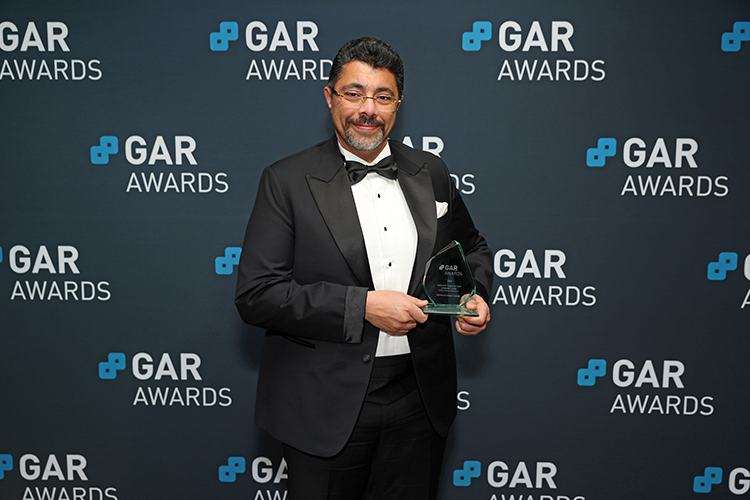
One of the most visible aspects of Ciarb’s thought leadership are our Guidelines. A few years ago, Ciarb won the Global Arbitration Review (GAR) Award for Best Innovation following the release of Guidelines for Witness Conferencing in International Arbitration. There is nothing like it in terms of explaining when and how to conduct witness conferencing, including with options to have it led by tribunal, counsel or experts.
In 2025, Ciarb published its Guideline on the Use of AI in Arbitration, which deals with one of the most pressing issues of our time and is arguably the most comprehensive among similar works available for the arbitral community. AI tools will inevitably become part of our practice. This is not a reason to despair or give up on upholding the core values of dispute resolution. Quite the opposite. Knowledge and awareness about AI and technological developments are key.
Guidelines like this are the result of working groups comprising diverse people from around the globe, and taking part is a great opportunity to develop your international practice. The ADR community should continue to rely on Ciarb for thought leadership and innovation, as well as for the preservation and promotion of long-established standards and best practice. Our Guidelines are a good starting point.
Do you have any final messages to our Branches and members?
Mohamed and his predecessors have set high standards during their presidential terms. I hope to follow in their footsteps with energy and enthusiasm for what Ciarb can bring to the ADR community as a global thought leader. For the first time, a Ciarb president will count on the recently formed Presidential Advisory Board, comprising former Ciarb presidents, and I am looking forward to engaging with them during my presidency. I hope I can later join the Board and assist our future president, Michael.
I plan to visit many of our Branches, especially in areas where Ciarb can have more presence. I hope the global ADR community will count on me, not only as a bearer of Ciarb’s mission and goals but also as a facilitator of the benefits Ciarb can provide.
We are living through an exciting period of innovation and transformation that is full of challenges, but also opportunities for growth. We can’t afford to be spectators. We must ride the wave of change and not be carried away by it – and there is no better place than Ciarb to help us shape that future.